
Sky Optics Polarized Amber Sunglasses Lens Review
Updated: May 7
Sky Optics is a new brand out of Flight Sunglasses, and they have come out of the gate with a Tier 1 photochromic glass lens right out of the box. The Amber Polarized is essentially the Serengeti Drivers concept, rebuilt in a slightly more yellow hue than the rose-brown tint the Drivers are known for.
Check out the Amber Polarized on Sky Optics' Website. Use code "science30" for $30 off.

If you would like to know how brown lenses work in general, click here.
In This Review
Lens Specs | Sky Optics Polar Amber |
Technology | Photochromic |
Lens Color | Brown |
Mirror Color | N/A |
VLT | 12% to 22%, Category 2 to 3 |
ABBE | 58 |
Coatings | Anti-reflective, Scratch-resistant, UV, Infrared and Blue-light blocking |
Material | Glass |
Weight | Moderate |
Scratch Resistance | High |
Prescription Available | Yes |
1 |
To state the obvious about this lens, it pays homage to the legendary Serengeti Drivers lens, but they are not the exact same. We will discuss the differences below.
The clarity of the Polar Amber is top-notch, Japanese mineral glass. The glass is the same thin style that Serengeti, Maui Jim, Costa Del Mar, etc., all use to keep the weight down.
They are also chemically tempered to ensure scratch and impact resistance. The glass blanks come from Corning.
The lenses are photochromic, adapting to any light condition in any setting. They are activated by the amount of UV radiation in the atmosphere and engineered to gradually transition from light to dark.
In bright conditions, UV radiation is more intense. The lens molecules expand in size, darkening the lenses. Less light can then pass through. In darker conditions, UV radiation is less intense. The molecules shrink and separate, lightening the lenses. More light can pass through. When activated, they get around a 12% VLT, and a 22% VLT when not.
Behind a UV-protective windshield, they will not darken that much. However, that is actually a good thing in general, as the windshield already blocks 10-30% of light, and most dark sunglasses are too dark behind a windshield. A photochromic lens that stays lighter behind the windshield and darkens outside the car is the ideal setup for driving, and that is exactly what the Drivers have been doing for decades and what the Sky Optics Amber does now as well. You can read more about that here.
The HEV blue-light blocking is built into the glass itself, not a coating on top, which is how the Drivers do it too. Having this gives a better natural color balance and improves contrasts and perception by acting like a visual equalizer to achieve the perfect mix of colors across all conditions.
The titanium frames that come with these already relatively light glass lenses keep the overall package lighter than glass usually feels on your face. That's a small thing, but if you have worn glass lenses in heavier acetate or metal frames, you will notice it. These are arguably the lightest glass lens sunglasses I have ever worn.
Is it eligible for prescription?
Yes, for the frames, but not in this glass lens yet. That may come in the near future. Flight Sunglasses does RX for/with a lot of top brands.
Also check out: Best Sunglasses Cases, Storage, and Travel Cases
How does the lens look?
The front of the lens looks like a regular brown lens. No mirror, no flash.

The back has a blue shine from the anti-reflective coating. The tint on the back is amber, a warm rose-brown.
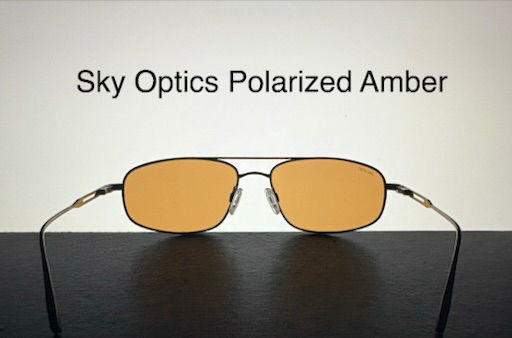
I covered the right lens and held the left in the sun for two minutes. You can see that slight darker adjustment in the left lens.

And here is the Amber Polar on top with the Serengeti Drivers Polarized on the bottom. The Amber Polar is darker, more saturated, and more yellow (rather than rose), but we will see that it is still much closer to the Drivers than other brown lenses.

What does the view look like?
There is no point beating around the bush here: this is a take on the Serengeti Drivers, and the slight difference is the base tint. The Drivers use a rose-brown that leans slightly pink. The Sky Optics Amber adds a little more yellow that leans warm and golden. Same category of lens, same photochromic behavior, same HEV filtering, very slightly different tint. To be clear, it is still much more rose than a full yellow-brown lens like the Randolph Tan or Persol Brown, but compared to the Drivers, it is not as rose.
The way it adds more warmth is by very slightly reducing red and blues, which makes greens relatively more prominent, and as green and red get closer, the lens gets more yellow. You can see that here:

You can see how adding some red and blue, while keeping greens the same, makes the Drivers slightly more rose.


Generally, it is better to add some warmth to a lens to make the world appear more colorful and vibrant. This is because blue light, which brown lenses transmit less of than green and red light, is cooler and has higher energy, making it annoyingly prevalent and hurting our ability to see other colors clearly. Adding warmth and color to the view also tends to increase our alertness, energy, and happiness.
I will be honest here, because otherwise I would not be doing the review properly. I personally prefer the more rose-brown of the Drivers. Keep in mind that this lens is the closest lens you can get to the Drivers, and the tint is 90% the same. Most people would not be able to tell a difference between them, but holding them up next to each other and swapping back and forth, I can see a small difference in the tint. The fact that I personally prefer more rose doesn't take anything away from the quality of what Sky Optics has built here, and many people will prefer it to the Drivers. It is a matter of taste, and taste cuts both ways.
With that out of the way, the view is warm, golden, and alive. Greens are vivid, reds are sharp, and blues are subdued but still pleasant. The sky reads slightly browner and darker than it does through the Drivers, which is a natural consequence of the yellow doing more to knock down blue. Contrast is high without feeling unnatural, and there is no weird or off-putting shift. Adaptation takes a few seconds, not longer.
If you have ever wanted the Serengeti Drivers with a slightly warmer, more classic brown tint, this is that lens.
Sunny Conditions
These photos are what I have used to show the view. Keep in mind that photos will never look as good as the real view looking through the sunglasses with your own eyes.
Interested in experiencing the Sky Optics Amber Polarized for yourself? Check it out here. Use code "science30" for $30 off.
Here is my simulation of how the lens looks:

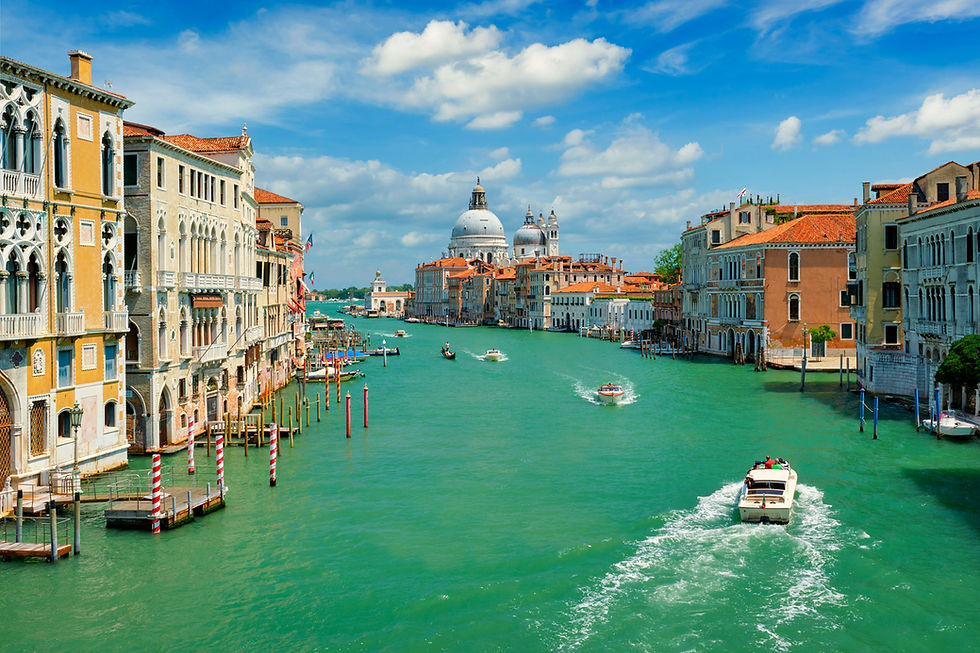
Brown lenses can sometimes feel too "hot" in bright sunlight, especially when they lean yellow-brown and really knock down blues. This lens doesn't go that far, because it is still a rose-brown, but it is warmer than the Drivers. The greens pop, the reds are bright, and the scene feels alive. Against a neutral grey lens, the Amber is noticeably warmer and more energizing. A grey is more accurate to what is actually there, but many people, myself included, find a bit of warmth more useful for everyday wear.
In really bright, high-noon, cloudless July sun, this is a solid lens but not the specialist, especially for extended wear. If you spend most of your time in those conditions, a dark grey or green lens will be more comfortable. In every other lighting condition, this shines.
Cloudy Conditions
This is where the lens really earns its tier. Overcast and mixed light is exactly the condition photochromic brown lenses were designed for. The photochromic lightens up, the HEV filter warms the cool, blue-heavy overcast light, and the amber tint cuts through the flatness. A fixed 12% VLT brown lens would feel heavy on a cloudy day. This one doesn't.
Against a standard fixed brown, the Sky Optics reads lighter in flat light because the photochromic has lifted. That is the lens working the way it should. In darker conditions with some haze or glare, the colors become saturated and calm, and the view feels bright without being harsh.


Use code "science30" for $30 off
Optimal and Suboptimal Viewing Conditions
This lens is great for driving, overcast, mixed light, partial sun, fall and winter afternoons, and mornings and evenings in summer. Basically, any condition where the sun is not sitting directly overhead in a cloudless sky. I tested these in winter and summer conditions, in the northeast and the southeast, and took them to Vision Expo in Orlando. They performed well in all of those settings. I was comparing this lens to several top Smith lenses I had with me in Orlando in bright and slightly hazy conditions, and was very impressed.
The driving use case deserves its own line because it is where I think this lens is at its best. The photochromic behavior behind a windshield is great. A fixed dark lens is too dark in the car, a fixed light lens is too light outside the car, and this one handles both without you thinking about it.
The suboptimal conditions are the same as the Drivers: full, clear, high-noon summer sun, high-altitude snow, and anywhere you would normally reach for a grey or green lens. Still a solid 8 in those conditions, but there are better tools for that job.
Like the Drivers, there are no conditions where this lens is "bad".
Sports
The tint is great for most outdoor sports. The problem is the material. Glass doesn't mix with impact risk, so I would steer away from this lens for cycling, trail running, climbing, ball sports, or anything with a chance of something hitting your face. For driving, sailing, fishing, hiking, casual use, and golf (if you are not worried about a flying ball or club), it's fine.
The lens is also polarized, which is worth mentioning. If you fly, mountain bike, or need to read a digital display reliably through the lens, polarization can get in the way. In general, if polarized is a deal-breaker for what you do (for depth perception, which usually carries impact risk), glass probably is too, so the two concerns usually overlap.
Comparison to the same brand - Sky Optics
Sky Optics Desert Blue
The Desert Blue is the same base lens with a blue mirror on the front. The mirror pulls the tint redder and more saturated, and blues take a bigger hit because the mirror is reflecting more of that part of the spectrum back. VLT is 18-10%, so slightly darker than the Amber Polarized. Pick the Desert Blue if you want the flash look and a more intense, punched-up view. Pick the Amber Polarized if you want the cleaner, quieter aesthetic and the slightly lighter photochromic range.

Sky Optics Amber Gradient (non-polarized)
The Amber Gradient uses the same tint family as our lens but without polarization and with a gradient from dark at the top to lighter at the bottom. VLT is 25-14%. The colors feel slightly more boosted, probably because more light is getting through, and the lack of polarization makes it a better fit if you need to read devices regularly or do anything where polarized lenses get in the way. Pick this if you want the aesthetic of a gradient, you are skipping polarization on purpose, or you want a lighter lens overall. There is a non-mirrored and silver-mirrored version of this.
Sky Optics Polar Amber Flash Silver Mirror
Nearly identical to the Amber Polarized but slightly darker at 20-11% VLT and with a silver flash mirror on the front. If you want the same optical experience with a different look, this is the one.
Comparison to Brown Lenses of Different Brands
Serengeti Drivers
This is the most direct comparison. The Drivers and the Sky Optics Amber are nearly the same lens in concept: both are Tier 1, both are photochromic glass, both are polarized, both have HEV blocking, both sit in the same VLT range, both are made for driving and versatility. The difference is the tint. Drivers are rose-brown. Sky Optics is slightly more yellow-brown. If you love the Drivers, you know how good they are. If you have tried the Drivers and found the rose-brown a little pink for your taste, the Sky Optics is the lens you have been waiting for. It delivers the same experience in a warmer, more traditional tint.
See here for the full Serengeti Drivers review.
Maui Jim HCL Bronze
The HCL Bronze is one of the only other lenses that can genuinely compete at this tier. It has a bi-gradient gold mirror and a tint that sits somewhere between rose-brown and yellow-brown, I call it a "balanced brown". The HCL is better in full, clear, bright sun, and it is the brown lens I would reach for on a high-noon beach day. The Sky Optics is better in mixed light, overcast, and driving, mainly because of the photochromic behavior. If your wear is mostly bright-sun, pick the HCL. If it's mixed conditions and driving, pick the Sky Optics.
See here for the full Maui Jim HCL Bronze review.
Dita Lancier Land
The Lancier Land is a rose-lean, more natural-feeling lens that holds up beautifully in full summer sun year-round. It is a great driving lens and a great everyday lens. The main difference other than tint is material. The Dita is nylon, so it is lighter and more impact-resistant, but it doesn't have the clarity or the physical sensation of proper glass. If you need a lightweight lens for an active lifestyle, the Dita makes sense. If you want the glass experience or photochromic, the Sky Optics wins.
See here for the full Dita Lancier Land review.
Persol Brown Polarized
Persol's brown is a warm yellow-brown lens, while in the comparison, the Sky Optics is more rose. The other difference is that the Persol is a standard brown lens, no photochromic, no HEV filter, and the VLT is fixed. The tint alone is lovely and classic, but the Sky Optics is a much higher tier with all the technology added on top. If you have loved Persol browns for years, the Sky Optics is the upgrade path.
See here for the full Persol Brown Polarized review.
Randolph Tan Polarized
Similar story to the Persol. The Tan is a glass, polarized, warm yellow-brown with a fixed VLT around 10%. Very classic, very good at what it does, but it doesn't have the photochromic adaptability or the HEV filtering of the Sky Optics. Another case where the Sky Optics is the modern, more capable version of a tint you might already know you like.
See here for the full Randolph Tan Polarized review.
Conclusion - Sky Optics Polarized Amber Lens Review - Should you buy it?
The Sky Optics Amber Polarized is a Tier 1 photochromic glass lens. Photochromic, polarized, HEV-filtering, proper glass, and paired with titanium frames that keep the weight manageable.
This lens shines in driving, overcast, mixed light, and general everyday wear. The photochromic behavior behind a windshield is a key feature, just like it is on the Drivers.
This earns a serious look, especially for a brand-new product that is launching at the top of the tier list. That doesn't happen often.
Use code "science30" for $30 off


